Indian Pueblo of Laguna, New Mexico
Open Access
In accordance with the DAM's Open Access Policy, you can freely download this image.
Higher Resolution Images
If you require a high quality TIFF file for your publication or product, please complete the Image Request Form.
Open Access Download
Public domain artwork images downloaded from the Denver Art Museum collections should be credited: "Photography courtesy Denver Art Museum." Full caption information available below the Download Images link.
If you are reproducing this open access image in a publication, please provide us with information about your specific use to help DAM retain the bibliographic record of where artwork reproductions are utilized.
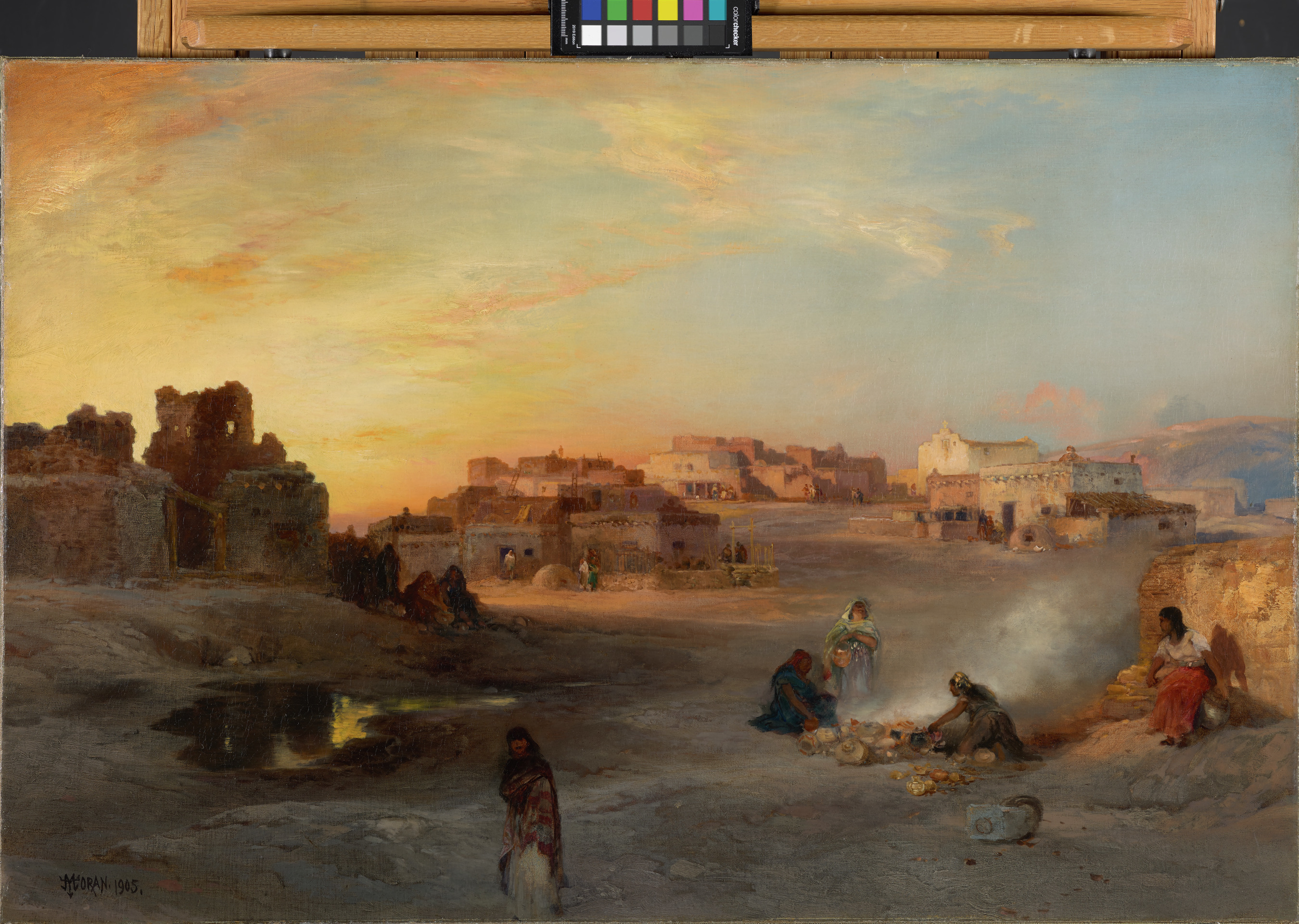
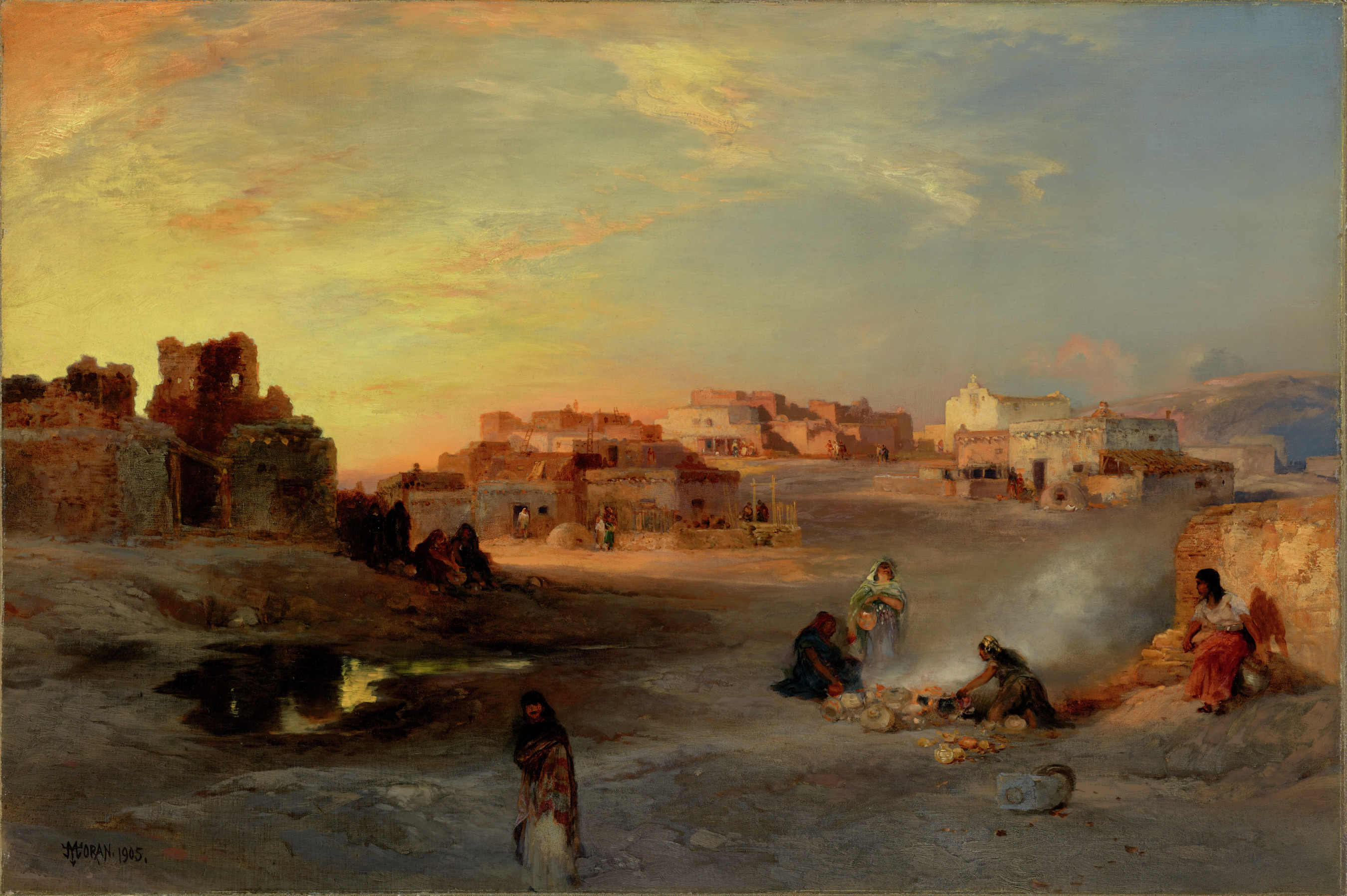
Thomas Moran, Indian Pueblo of Laguna, New Mexico, 1905. Oil on canvas; 20 ¼ x 30 ¼ in. Funds from Henry Roath, 2020.195
Created from Moran’s memories and sketches, this painting encapsulates multiple layers of Southwest history. In the foreground, women of the Pueblo of Laguna bake pots with traditional techniques used for centuries by the people who lived in the region. Pueblo architecture occupies the middle ground of the painting and leads the eye to a Spanish Mission church on the right. Spanish colonists were the first to bring the tradition of retablos, small paintings that show devotion to holy figures associated with the Catholic Church, to the Americas.
Creada por Moran a partir de recuerdos y bocetos, esta pintura resume múltiples estratos de la historia del Suroeste. En primer plano, unas mujeres de la cultura pueblo de Laguna cuecen vasijas de barro con técnicas tradicionales usadas durante siglos por los habitantes de la región. La arquitectura pueblo ocupa el plano medio y dirige la mirada hacia la iglesia misionera española a la derecha. Los colonizadores españoles trajeron a América la tradición de los retablos, pequeñas pinturas de devoción a figuras sacras relacionadas con la Iglesia católica.
This information is published from the Denver Art Museum’s collection database. Updates and additions based on research and imaging activities are ongoing. The images, titles, and inscriptions are products of their time and are presented here as documentation, not as a reflection of the museum’s values. If you have corrections or additional information about this object please email us at info@denverartmuseum.org to help us improve our records.
Every effort has been made to accurately determine the rights status of works and their images. Please email us imagerights@denverartmuseum.org if you have further information on the rights status of a work contrary or in addition to the information in our records.