

Collection Highlights
Explore objects from The Petrie Institute of Western American Art in our online collection.

Charles Bird King
Charles Bird King, Eagle of Delight, about 1822. Oil on panel; 17 x 13 in. William Sr. and Dorothy Harmsen Collection, 2001.462

Charles Deas
Charles Deas,Long Jakes, "The Rocky Mountain Man", 1844. Oil on canvas; 30 x 25 in. Denver Art Museum: Jointly owned by the Denver Art Museum and the American Museum of Western Art---The Anschutz Collection. Purchased in memory of Bob Magness with funds from 1999 Collectors' Choice, Sharon Magness, Mr. & Mrs. William D. Hewit, Carl & Lisa Williams, Estelle Rae Wolf - Flowe Foundation and the T. Edward and Tullah Hanley Collection by exchange, 1998.241

Thomas Hill
Born in Birmingham, England, Thomas Hill moved to Massachusetts in 1844 and then to California in 1861. This painting, one of his earliest of Yosemite, depicts the Merced River and Half Dome. Artworks such as this helped inspire the first piece of conservation legislation: in 1864, during the Civil War, President Lincoln signed the Yosemite Grant, which set aside the area for public recreation and enjoyment.
Nacido en Birmingham, Inglaterra, Thomas Hill se mudó a Massachusetts en 1844 y después a California en 1861. Esta pintura, una de las primeras que pintó de Yosemite, muestra el río Merced y la formación rocosa llamada Half Dome. Obras como esta inspiraron la primera ley conservacionista: en 1864, durante la Guerra Civil, el presidente Lincoln firmó la Cesión de Yosemite, que reservaba el área para recreación y disfrute público.
Thomas Hill, Yosemite, 1865. Oil paint on canvas; 30 x 44 in. Denver Art Museum: Funds from Henry Roath, 2019.539.

Thomas Moran
Thomas Moran, Sunset, Green River Butte, 1915. Oil paint on canvas; 10 ¼ × 12 ¼ in. Denver Art Museum: Gifted by the Roath Collection, 2013.110

Frederic Remington
Frederic Remington, The Broncho Buster, modeled 1895 (cast before May 1902). Bronze; 23 ¼ × 22 × 13 in. Denver Art Museum: Gift of the Roath Collection, 2013.91. Photography © Denver Art Museum

Charles Marion Russell
Because of his experience working with cattle, his friendships with Native Americans, and his talent with paintbrush and clay, the self-taught Charles Marion Russell became a preeminent artist of the Old West. While Russell’s subjects were meticulously observed, they were also a product of a natural storyteller’s lively imagination. Here, he captures the glowing jewel tones of Montana skies and confident yet careful Kootenai hunters striding alongside their horses, which are draped to appear like bison, to safely travel through enemy Blackfeet country.
Su experiencia de trabajo con ganado, sus amistades entre los nativos y su talento con el pincel y la arcilla hicieron de Charles Marion Russell un artista notable del Viejo Oeste, incluso siendo autodidacto. Si bien sus temas eran producto de una observación meticulosa, también los animaba la viva imaginación de este narrador innato. Aquí capta los tonos radiantes del cielo de Montana al fondo de unos cazadores kootenai que avanzan resueltos y a la vez cautelosos junto a sus caballos, cubiertos para que parezcan bisontes, a fin de atravesar a salvo el territorio enemigo de los blackfeet.
Charles Marion Russell, In the Enemy’s Country, 1921. Oil paint on canvas; 24 x 36 in. Denver Art Museum: Gift of the Magness Family in memory of Betsy Magness, 1991.751.

Victor Higgins
Mabel Dodge Luhan, a patron of the arts who lived in Taos, wrote that Victor Higgins “can say more with his pearly tones than most painters do with the whole solid color scale.” Using those pearly tones, Higgins evoked crisp, winter air and contrasted sloping hills with sharp, blue shadows. A sturdy line of adobe architecture nestled beneath soaring mountains underscores what Luhan called his “dramatic appreciation” of the region’s sublime landscapes and its people.
Según Mabel Dodge Luhan, una mecenas de las artes que vivía en Taos, Victor Higgins “puede decir más con sus tonos nacarados que lo que dicen la mayoría de los pintores con toda la escala de colores sólidos”. Usando esos tonos nacarados, Higgins evocó el fresco aire invernal y contrastó colinas de suaves pendientes con intensas sombras azules. Una línea sólida de arquitectura de adobe cobijada bajo unas montañas majestuosas subraya lo que Luhan llamó su “apreciación dramática” de los sublimes paisajes y la gente de esta región.
Victor Higgins, Taos, New Mexico, about 1921. Oil on canvas; 52 x 56 in. Denver Art Museum: Gift from Dr. George C. Peck and Catherine M. Peck, 2013.462

E. Martin Hennings
Born in Chicago, E. Martin Hennings studied in Munich and traveled through Europe before visiting Taos in 1917. Rather than placing Native Americans in an imagined past, Hennings observed their lifestyle in the present. In this painting, a dark storm fills the background and pushes the brightly lit foreground figures toward the viewer. The Native Americans wear moccasins and woven blankets as well as nontraditional clothing such as a tennis sweater and neckties.
Nacido en Chicago, E. Martin Hennings estudió en Múnich y viajó por Europa antes de visitar Taos en 1917. En lugar de representar a los indígenas en un pasado imaginario, prefirió observar su estilo de vida en el presente. Aquí, una tormenta oscura llena el fondo del cuadro y empuja hacia el espectador las figuras iluminadas en el primer plano. Los indígenas usan mocasines y mantas tejidas, además de ropa no tradicional como un suéter de tenis y corbata.
E. Martin Hennings, Rabbit Hunt, about 1925. Oil on canvas; 35 ½ x 39 ½ in. William Sr. and Dorothy Harmsen Collection at the Denver Art Museum, 2001.449

Robert Henri
After growing up in Cozad, Nebraska, and Denver, Henri eventually moved to New York City where he became a painter and arts educator. In 1913, he traveled to southern California where he met the Tewa artist Tom Po Qui who was visiting from P'ohwhóge Owingeh (San Ildefonso Pueblo). With quick, gestural brushstrokes, Henri depicts her colorful clothing, forthright gaze, and glints of light on her silver squash blossom necklace.
Robert Henri, quien creció en Cozad, Nebraska, y en Denver, se radicó más tarde en Nueva York, donde fue pintor y profesor de arte. En 1913, viajó al sur de California y allí conoció a la artista tewa Tom Po Qui, que había ido de visita desde P’ohwhóge Owingeh (Pueblo San Ildefonso). Con pinceladas rápidas y gestuales, Henri capta el colorido atuendo de la joven, su mirada directa y los destellos de luz sobre su collar de plata con diseños de flor de calabaza.
Robert Henri, Tom Po Qui (Water of Antelope Lake/Indian Girl/Ramoncita), 1914. Oil on canvas; 40 ½ x 32 ½ in. William Sr. and Dorothy Harmsen Collection at the Denver Art Museum, 2001.461.

Marsden Hartley
Marsden Hartley traveled to New Mexico for the first and only time in 1918. He found the Southwest both inspiring and challenging, writing, “There is nothing in conventional esthetics that will express the red deposits, the mesas, and the Canyon of the Rio Grande.” Even after moving away, he continued to ponder the Southwest, later producing the New Mexico Recollections series, including this work, in Berlin. He reprised the subject in unconventional ways, using atypical colors and little detail.
Marsden Hartley viajó a Nuevo México por primera y única vez en 1918. El Suroeste le pareció inspirador y a la vez desafiante: “No existe nada en la estética convencional que pueda expresar los depósitos rojos en la roca, las mesas, el cañón del río Grande”. Incluso ya lejos, siguió recordando el Suroeste y produjo, desde Berlín, la serie Recuerdos de Nuevo México, que incluye esta obra. Luego retomó el tema en formas menos convencionales, con colores atípicos y pocos detalles.
Marsden Hartley, New Mexico Recollection #6, 1922. Oil on canvas; 25 ¼ x 35 ½ in. Denver Art Museum: William Sr. and Dorothy Harmsen Collection, 2001.455

Kenneth Miller Adams
Kenneth Miller Adams studied in France and Italy before moving to Taos in 1924, where he became interested in the local Spanish American population. Here, he surrounds the strong bodies of two female workers with golden harvest tones. The viewer’s eye travels around the composition—from the upright woman in the green dress, through her sheaf of wheat, and down the stooping woman’s back and arm. This movement imitates the endless motion of these women’s exhausting labor.
Después de sus estudios en Francia e Italia, Kenneth Miller Adams se instaló en Taos en 1924, en donde se despierta su interés por la población hispanoamericana local. En esta obra, envuelve los cuerpos sólidos de dos trabajadoras con los tonos dorados de la época de la cosecha. La vista de espectador recorre la composición, desde la mujer erguida en su vestido verde hacia su gavilla de trigo, y baja por la espalda y el brazo de la mujer encorvada. Este recorrido visual replica el movimiento repetitivo del agotador trabajo de estas mujeres.
Kenneth Miller Adams, Reapers (Harvest), 1946. Oil on canvas; 40 x 32 in. Denver Art Museum: Gift from Dr. George C. Peck and Catherine M. Peck, 2013.466. © Estate of Kenneth Miller Adams

Ethel Magafan
Ethel Magafan grew up in Colorado and studied with Frank Mechau, who taught her the technique of mural painting. She won numerous government-funded mural commissions before relocating to Woodstock, New York. There, Magafan established a long and successful career as an artist. This painting reflects her embrace of abstraction combined with her love of the Colorado Rockies, to which she regularly returned for inspiration.
Ethel Magafan se crió en Colorado y estudió con Frank Mechau, de quien aprendió la técnica de la pintura mural. Ganó numerosas comisiones de murales financiada por el gobierno antes de reubicarse en Woodstock, Nueva York. Allí, Magafan gozó de una larga y exitosa carrera como artista. Esta pintura evidencia su adopción de la abstracción, además de su amor por las montañas Rocosas de Colorado, a las que regresaba regularmente para inspirarse.
Ethel Magafan, Springtime in the Mountains, about 1961. Tempera paint on board; 40 x 50 in. Denver Art Museum: Julie and Robert Lewis Collection at the Denver Art Museum, 2018.656. © Estate of Jenne Magafan
Department Staff
JR Henneman, Director and Curator of the Petrie Institute of Western American Art
JR Henneman received her doctoral degree in 19th century British and American art and visual culture at the University of Washington in 2016. Upon her arrival at the Denver Art Museum, JR co-curated Backstory: Western American Art in Context (2017) in collaboration with History Colorado and Natural Forces: Winslow Homer and Frederic Remington (2020) and contributed to The American West in Art: Selections from the Denver Art Museum (2020). More recently, she curated and published catalogs for Near East to Far West: Fictions of French and American Colonialism (2023), The Life and Art of Tokio Ueyama (2024), and Storytellers: The Blackfeet Nation and Charles M. Russell (2026).
Meg Selig, Senior Curatorial Assistant
Meg Selig is the Curatorial Assistant for the Petrie Institute of Western American Art. She has a master’s degree in art history and has been at the DAM since 2015. She has worked on several exhibitions including A Place in the Sun: The Southwest Paintings of Walter Ufer & E. Martin Hennings, The Western: An Epic in Art and Film, The Light Show, Near East to Far West: Fictions of French and American Colonialism, and Southwest Impressions: Prints from the Barbara J. Thompson Collection.
Lauren Thompson, Senior Interpretive Specialist
Lauren Thompson is Senior Interpretive Specialist for European and American Art Before 1900 and for the Petrie Institute of Western American Art at the Denver Art Museum, where she has been interpretation lead on Glory of Venice: Masterworks of the Renaissance, Near East to Far West: Fictions of French and American Colonialism, and The Honest Eye: Camille Pissarro's Impressionism, among other exhibitions. Prior to coming to the DAM, she served as director of programs at the Ann Arbor Art Center and worked at Museum of Fine Arts, Houston where she was named Museum Educator of the Year in 2011 by the Texas Art Education Association. Lauren received her bachelor's in art history and communication from Trinity University and her master's in art history from the University of Denver.
Grace McCormick, Curatorial Fellow
Grace McCormick received her master’s degree from American University in 2024 specializing in American art. She joined the Denver Art Museum in 2026 as the newest member of the Petrie Institute of Western American Art. Prior to the DAM, she was a curatorial assistant at The Phillips Collection in Washington, DC where she helped realize exhibitions of both modern and contemporary American art including Miro and the United States, William Gropper: Artist of the People, and Tomorrow the Sun Will Rise.
Department History
The Denver Art Museum has collected and exhibited western American art for more than sixty years. In the 1950s, led by Royal Hassrick, the museum’s first curator of Western art—and with grants from the Boettcher Foundation, the Frederick G. Bonfils Foundation, the Fred E. Gates Fund, and the Lawrence Phipps Foundation—the museum purchased a group of exceptional works by early artists in the American West including William Jacob Hays and Alfred Jacob Miller. Important acquisitions and gifts continued through the years, with the addition of significant work by Thomas Moran, Albert Bierstadt, Frederic Remington, Charles Marion Russell, and Charles Deas.
In 2001, the museum received a transformative gift of western American art from William Sr. and Dorothy Harmsen that substantially broadened the museum’s holdings. Joan Carpenter Troccoli, PhD, previously director of Gilcrease Museum, joined by associate curator Ann Daley, established an Institute of Western American Art and initiated the annual publication of the scholarly journal Western Passages. After an extraordinary lead gift from Tom and Jane Petrie to partially endow the department in 2007, the institute was renamed the Petrie Institute of Western American Art, and by 2010, the Petrie Institute was fully endowed with donations from dozens of contributors. With this endowment, the institute is able to continue sponsoring symposia, speakers, and publications that further our knowledge of Western American art.
In 2005, longtime museum director Peter H. Hassrick came out of retirement to become curator and director of the institute. He introduced an annual symposium that remains a signature program in addition to a rigorous schedule of exhibitions and publications through the Institute’s Western Passages series. In 2009, Thomas Brent Smith became the director and curator of the Petrie Institute of Western American Art. Under his leadership, the department embarked on an ambitious program of exhibitions, publications, and collection refinement that elevated the DAM’s reputation as a leader in western American art. In 2016, JR Henneman, PhD joined the curatorial team and expanded the collection through acquisition of works by women and artists of color. She became director of the department in 2021 and has continued to push the field through innovative exhibitions including Near East to Far West: Fictions of French and American Colonialism (2023) and Storytellers: The Blackfeet Nation and Charles M. Russell (2026).
In 2013, collector Henry Roath made a significant gift of more than 50 western paintings and sculptures, including works by Frederic Remington, Thomas Moran, and artists associated with the Taos Society of Artists. In 2014, the museum further expanded its holdings by acquiring the Southwest collection of Dr. George C. and Catherine M. Peck. When Mr. Roath died in 2024, he left a bequest of $17 million to fund acquisitions in western American art, to date the largest cash gift for acquisitions ever received by the DAM. In 2024, collector Barbara J. Thompson gifted over 100 fine art prints featuring the American Southwest to the Petrie Institute of Western American Art in honor of her grandfather, the printmaker C. A. Seward. In 2026, Tom and Jane Petrie announced a planned gift of a comprehensive collection of works by Charles M. Russell. Thanks to these extraordinary gifts and entrepreneurial collection management, the strengths of the western American art collection at the DAM include western bronzes, works on paper, 19th century landscapes, the Taos Society of Artists, American modernism, and Charles M. Russell.
Symposia
In 2007, former director of the institute Peter H. Hassrick initiated the Petrie Institute of Western American Art’s annual symposium. Each year, invited scholars of art and history present their thoughts and research on an array of topics related to the art of the West to enthusiastic audiences.
For more information, email symposium@denverartmuseum.org.
Current and past symposia includes:
2026: Southwest Impressions: A Broader Perspective
2025: Art as Agency: Creating Beauty at Amache and Beyond
2024: Art and Ambition: Creative Partnerships in the American West
2023: Near East to Far West: A Closer Look
2022: Earthworks: Land Art in the West
2021: Great Women and the Arts of the West
2020: Natural Forces: Winslow Homer and Frederic Remington
2019: Familiar Images: Icons of International Frontiers
2018: Beyond America’s Heartland: Regionalism and the Art of the American West
2017: Set in the West: Telling Tales in Art and Film
2016: Walter Ufer and E. Martin Hennings: An In-Depth Look
2015: Western Character: Expressions of Identity and Place in Portraiture
2014: Journeys West
2013: Decades: An Expanded Context for Western American Art, 1900-1940
2012: Lest We Forget California: Artists in the Golden West
2011: A Distant View: European Perspectives on Western American Art
2010: Shaping the West: American Sculptors of the 19th Century
2009: Taos Traditions: Artists in an Enchanted Land
2008: Heart of the West: New Art/New Thinking
2007: Redrawing Boundaries: Perspectives on Western American Art
Publication History
Since its inception, PIWAA has actively published significant contributions to the field of western American art, including award-winning exhibition catalogs. Western Passages, its signature scholarly series, includes essays on the art of the American West by curators and historians. A collection catalog, The American West in Art, provides an updated account of our growing collection with wide-ranging essays by Thomas Brent Smith, Jennifer R. Henneman, and Molly Medakovich.
Publications:
- West Point Points West, Vol. 1 of Western Passages (Denver Art Museum, 2002)
- Sweet on the West: How Candy Built a Colorado Treasure, Vol. 2 of Western Passages (Denver Art Museum, 2003)
- Redrawing Boundaries: Perspectives on Western American Art, Vol. 3 of Western Passages (Denver Art Museum, 2007)
- Heart of the West: New Painting and Sculpture of the American West, Vol. 4 of Western Passages (Denver Art Museum, 2007)
- Colorado: The Artist’s Muse, Vol. 5 of Western Passages (Denver Art Museum, 2008)
- Peter H. Hassrick and Elizabeth J. Cunningham, In Contemporary Rhythm: The Art of Ernest L. Blumenschein (Norman: University of Oklahoma Press, 2008)
- Carol Clark, Charles Deas and 1840s America, Vol. 4 of The Charles M. Russell Center Series on Art and Photography of the American West (Norman: University of Oklahoma Press, 2009)
- Joan Carpenter Troccoli, ed., The Masterworks of Charles M. Russell: A Retrospective of Paintings and Sculpture, Vol. 6 of The Charles M. Russell Center Series on Art and Photography of the American West (Norman: University of Oklahoma Press, 2009)
- Charlie Russell and Friends, Vol. 6 of Western Passages (Denver Art Museum, 2010)
- Shaping the West: American Sculptors of the 19th Century, Vol. 7 of Western Passages (Denver Art Museum, 2010)
- Thomas Brent Smith, ed., Elevating Western American Art: Developing an Institute in the Cultural Capital of the Rockies, Vol. 8 of Western Passages (Denver Art Museum, 2012)
- Thomas Brent Smith, ed., Rocky Mountain Majesty: The Paintings of Charles Partridge Adams (Denver Art Museum, 2013)
- Decades: An Expanded Context for Western American Art, 1900–1940. Vol. 9 of Western Passages (Denver Art Museum, 2014)
- Thomas Brent Smith and Thayer Tolles, eds., The American West in Bronze, 1850–1925 (New York: Metropolitan Museum of Art, 2013)
- Thomas Brent Smith, ed., A Place in the Sun: The Southwest Paintings of Walter Ufer and E. Martin Hennings (Norman: University of Oklahoma Press, 2016)
- Mary-Dailey Desmarais and Thomas Brent Smith, eds., Once Upon a Time . . . The Western: A New Frontier in Art and Film (Denver: Denver Art Museum; Milan: Five Continents Editions, 2017)
- Maggie Adler, Diana Greenwold, Jennifer R. Henneman, and Thomas Brent Smith, Homer Remington (Fort Worth: Amon Carter Museum of American Art; Denver: Denver Art Museum; Portland: Portland Museum of Art, Maine, 2020)
- Thomas Brent Smith and Jennifer R. Henneman, eds. The American West in Art: Selections from the Denver Art Museum, Vol. 10 of Western Passages (Denver: Denver Art Museum; Milan: Five Continents Editions, 2020)
Exhibition History
Recent exhibitions organized by the The Petrie Institute of Western American Art include:
- Ongoing: Western American Art Galleries
- 2026: Storytellers: The Blackfeet Nation and Charles M. Russell
- 2026: John E. Thompson and Colorado Modernism
- 2025: Southwest Impressions: Prints from the Barbara J. Thompson Collection
- 2024: The Life and Art of Tokio Ueyama
- 2023: The Russells in Denver, 1981
- 2023: Near East to Far West: Fictions of French and American Colonialism
- 2020: Natural Forces: Winslow Homer and Frederic Remington
Featured Articles
Dive deeper into the stories behind some of the artworks in the collection by reading through articles written by our curators, conservators, and museum staff.

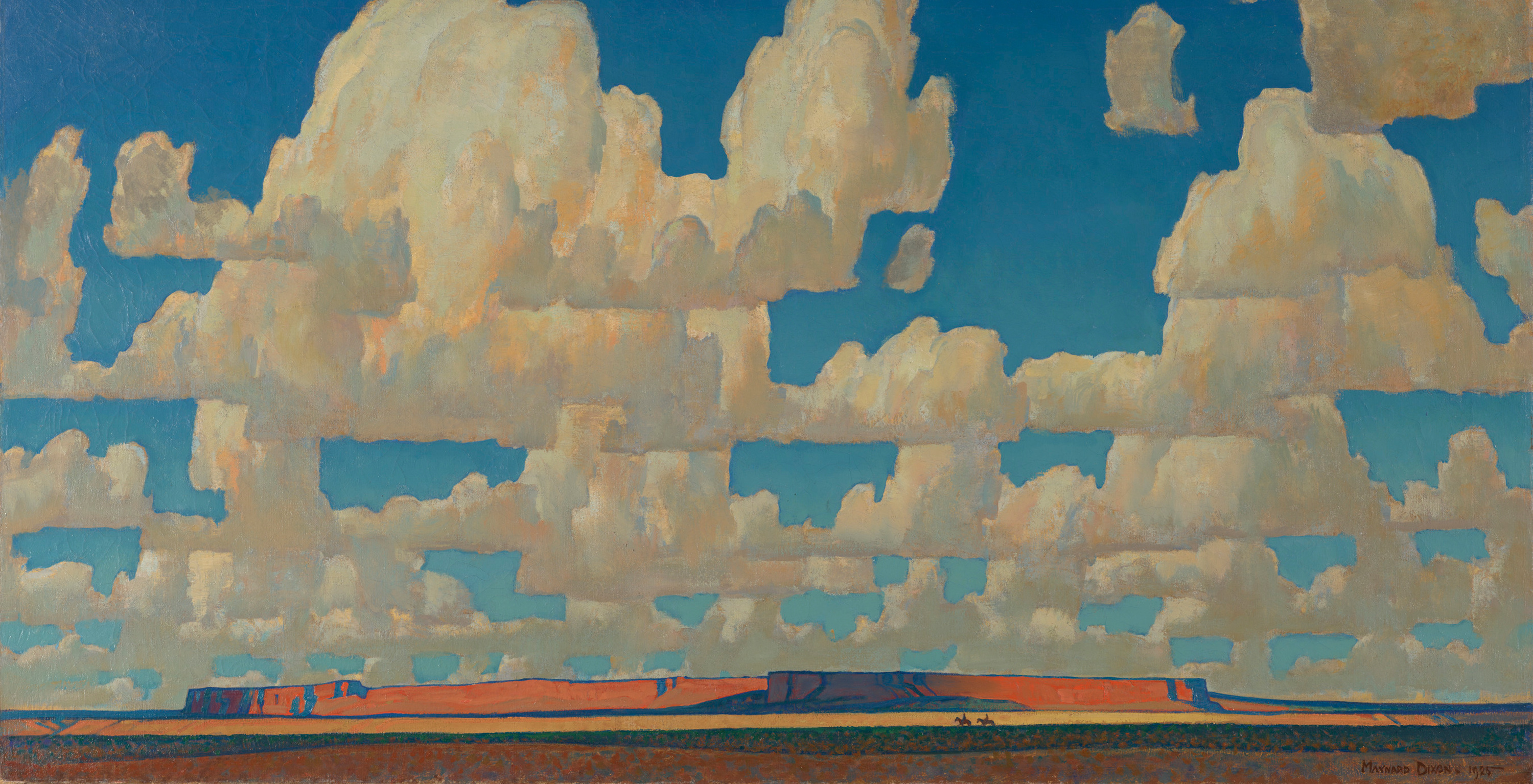
Cloud World by Maynard Dixon
American artist Maynard Dixon depicts the vast spaces and minute details of desert landscapes through rich color and thoughtful framing.

Artist Chiura Obata
Learn about seven paintings Obata's family gave the museum.

Frank Mechau’s Rodeo #1
Learn about the Colorado artist's 1934 painting.
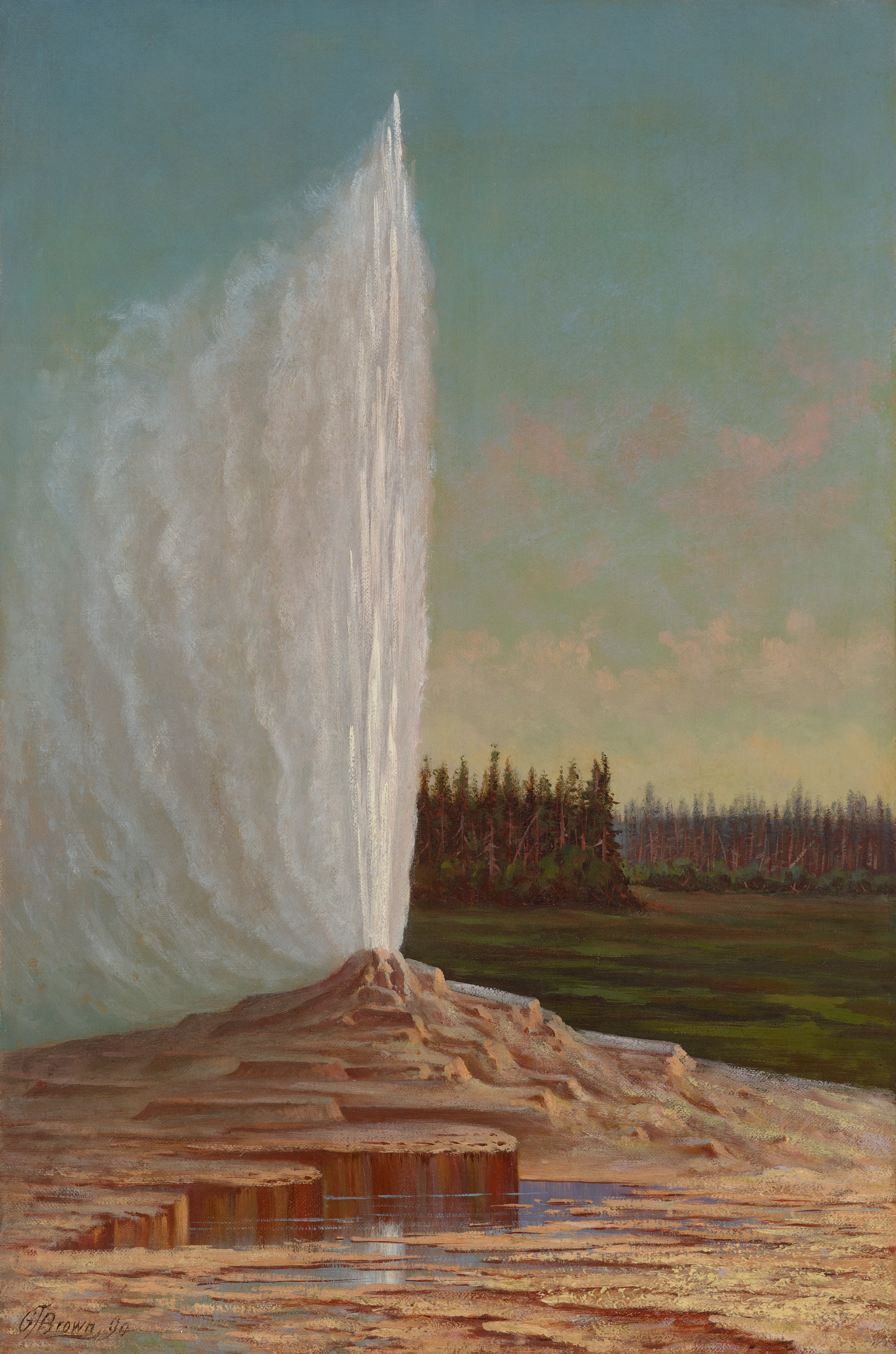
Castle Geyser, Yellowstone
Grafton Tyler Brown, a Black artist, painted this work in 1890 while living in Helena, Montana.

Artist Cady Wells' Southwest: Muse & Refuge
Wells was drawn to the Southwest's beauty and comparative acceptance of people with diverse sexual preferences.

Juan Braiding by Marjorie Eaton
Eaton’s story is filled with art, adventures, and famous personalities such as Diego Rivera and Frida Kahlo.

Comic Book about Black Cowboy Nat Love
Learn how Love's story was brought to life.

Stereotypes in Remington's Fight for the Waterhole
Learn more about Frederic Remington and his painting Fight for the Waterhole.

Symposium on Great Women and Arts of the West
The January 2021 symposium will recognize the role that women have played in the art world.

Finding the Right Words in Natural Forces
Excerpts of poems graced the walls of Natural Forces as a way to layer in other voices of the time period to give a richer context of th

Western American Art at the Denver Art Museum
A selection of old favorites and exciting new additions from the Western American Art collection are currently on display in the Hamilton Buildin

Paintings in the DAM's Collection Showcase Areas Protected by the Wilderness Act

Historic Paintings of Rocky Mountain National Park
There are many reasons why the state of Colorado is so spectacular.

Without Women Artists, the Denver Art Museum Wouldn’t Exist
The legacy of Emma Cherry, Elisabeth Spalding, Anne Evans, Marion Hendrie, and others.

Symposium Explores Work by Winslow Homer & Frederic Remington

DAM Western American Art Curator Nominated for Two Literary Awards

Frederic Remington's The Cheyenne
Frederic Remington’s The Cheyenne is considered one of the most important works in the Denver Art Museum's western American art collecti

Frank Mechau's Wild Horses on View in Stampede
In the Saddled/Ensillados section of Stampede: Animals in Art a string of multi-colored horses gallop, buck, and rear above oth

What Do You Know About Regionalism?
The annual Western American Art Symposium this year is called Beyond America’s Heartland: Regionalism and the Art of the American West.

A Mountain Symphony On Display to the Public for the First Time in 90 Years

History Colorado Center Exhibition Gives the Backstory Behind Western American Art

Western American Art on View in the Hamilton Building
In January we closed the western American art galleries on level 7 of the DAM’s North Building in preparation for an exciting revitalization proj

DAM Curator Gives Media a Sneak Peek of The American West in Bronze

Bronco-Inspired Art on View at the DAM (Photos)
The Super Bowl-bound Broncos' name celebrates the city's Wild West heritage.
