
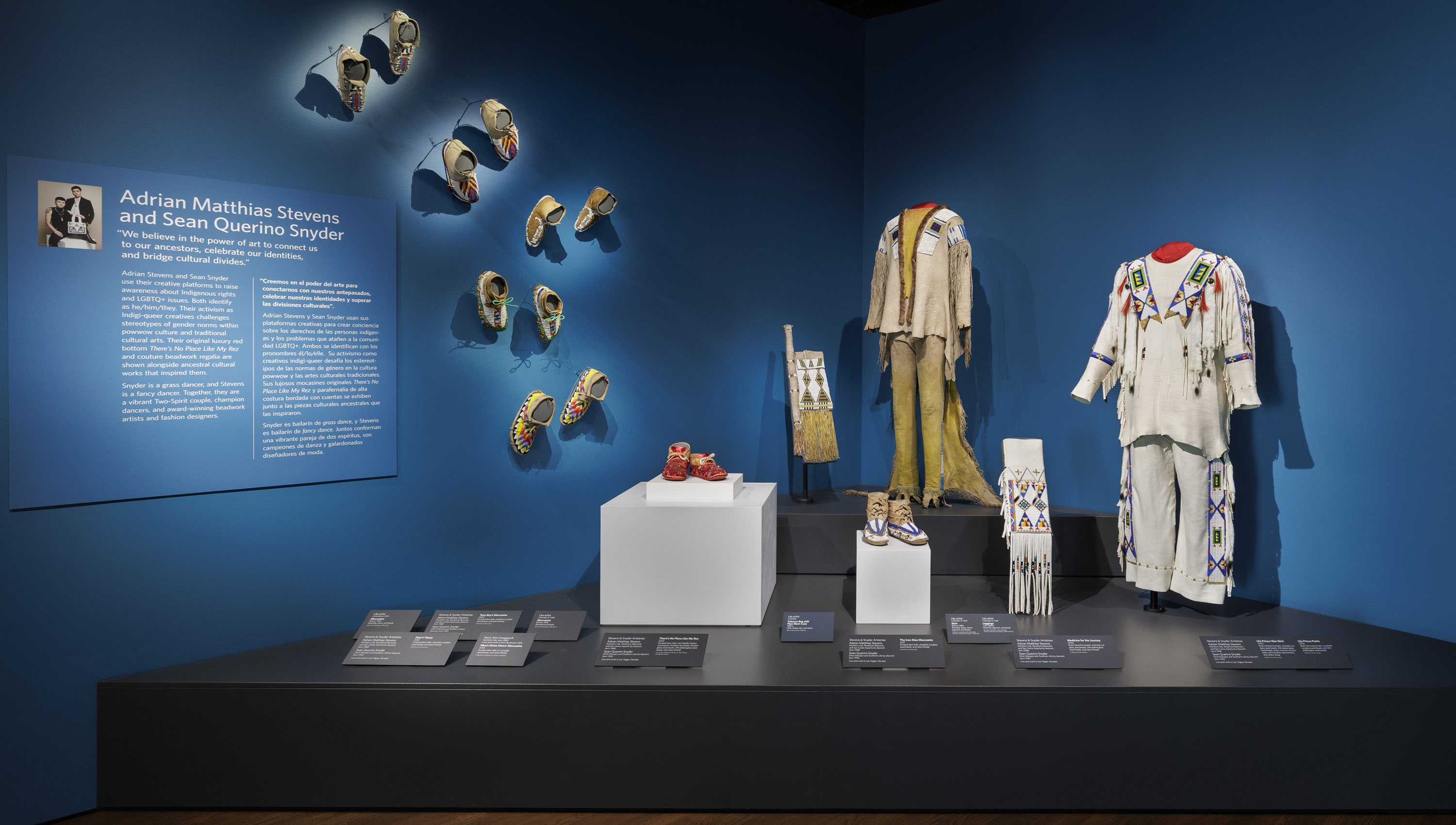
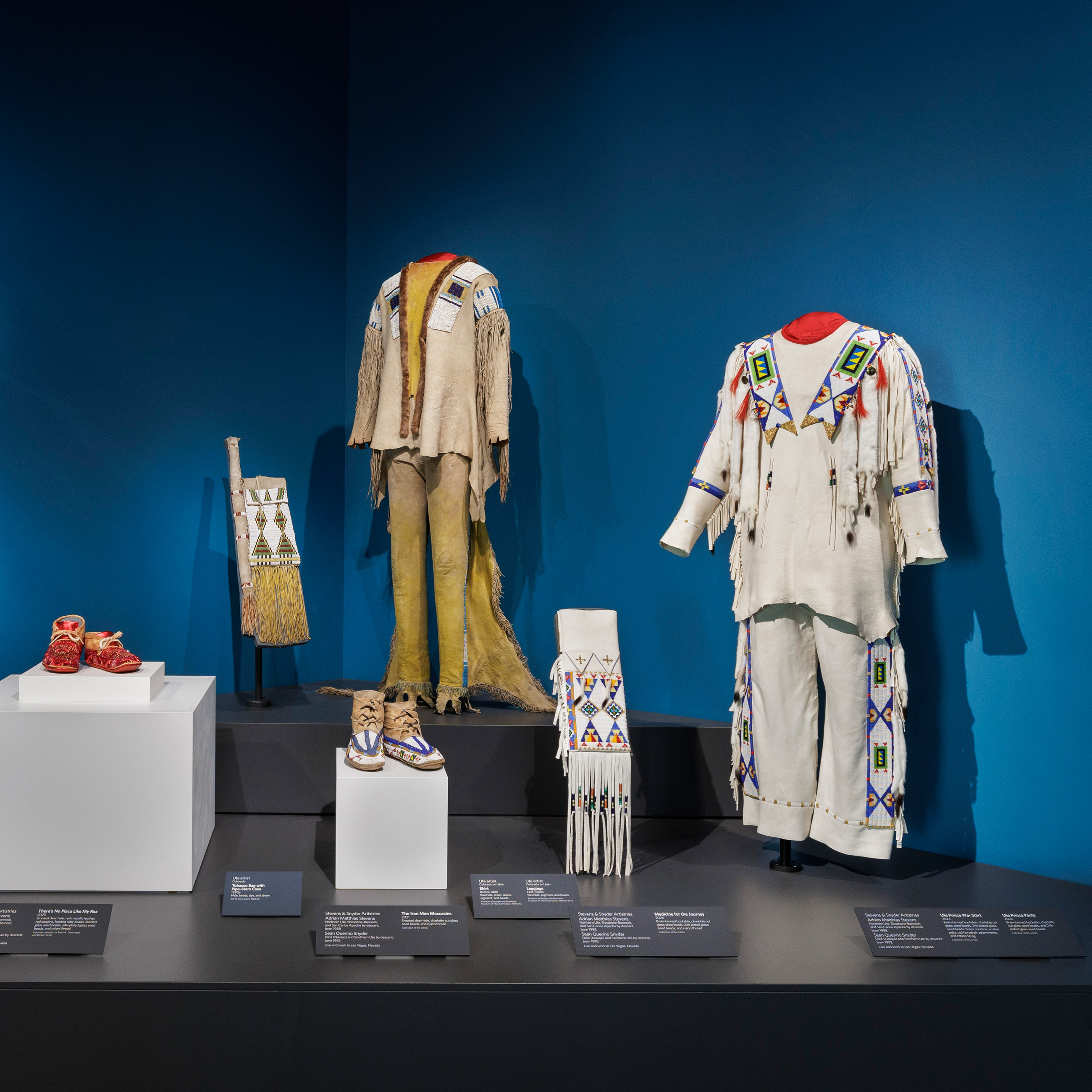
Historic regalia from the DAM's collection and new work by Stevens and Snyder in the Home/Land gallery.
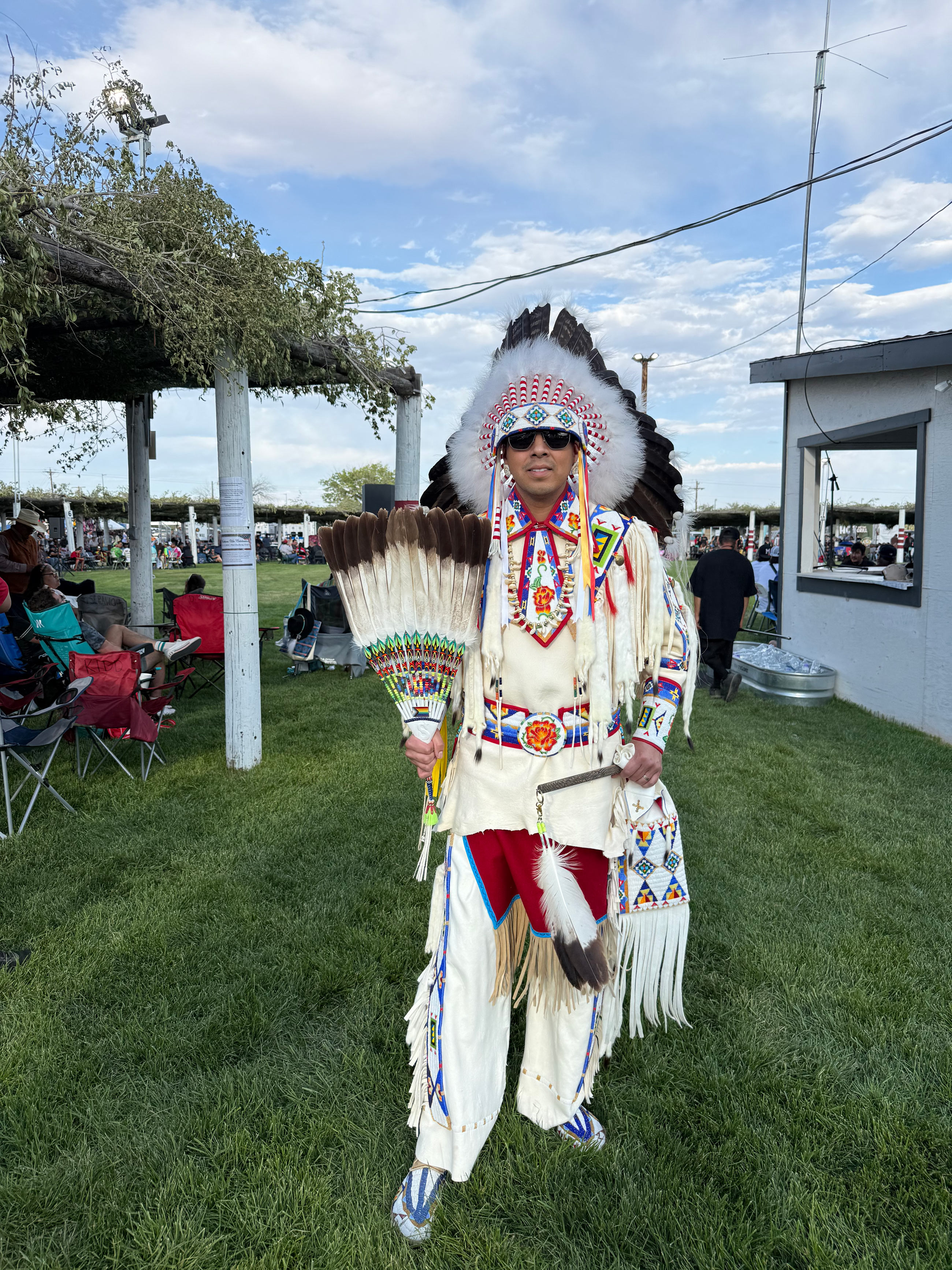
Adrian Stevens in his regalia and war bonnet. Photo courtesy of Adrian Stevens and Sean Snyder.
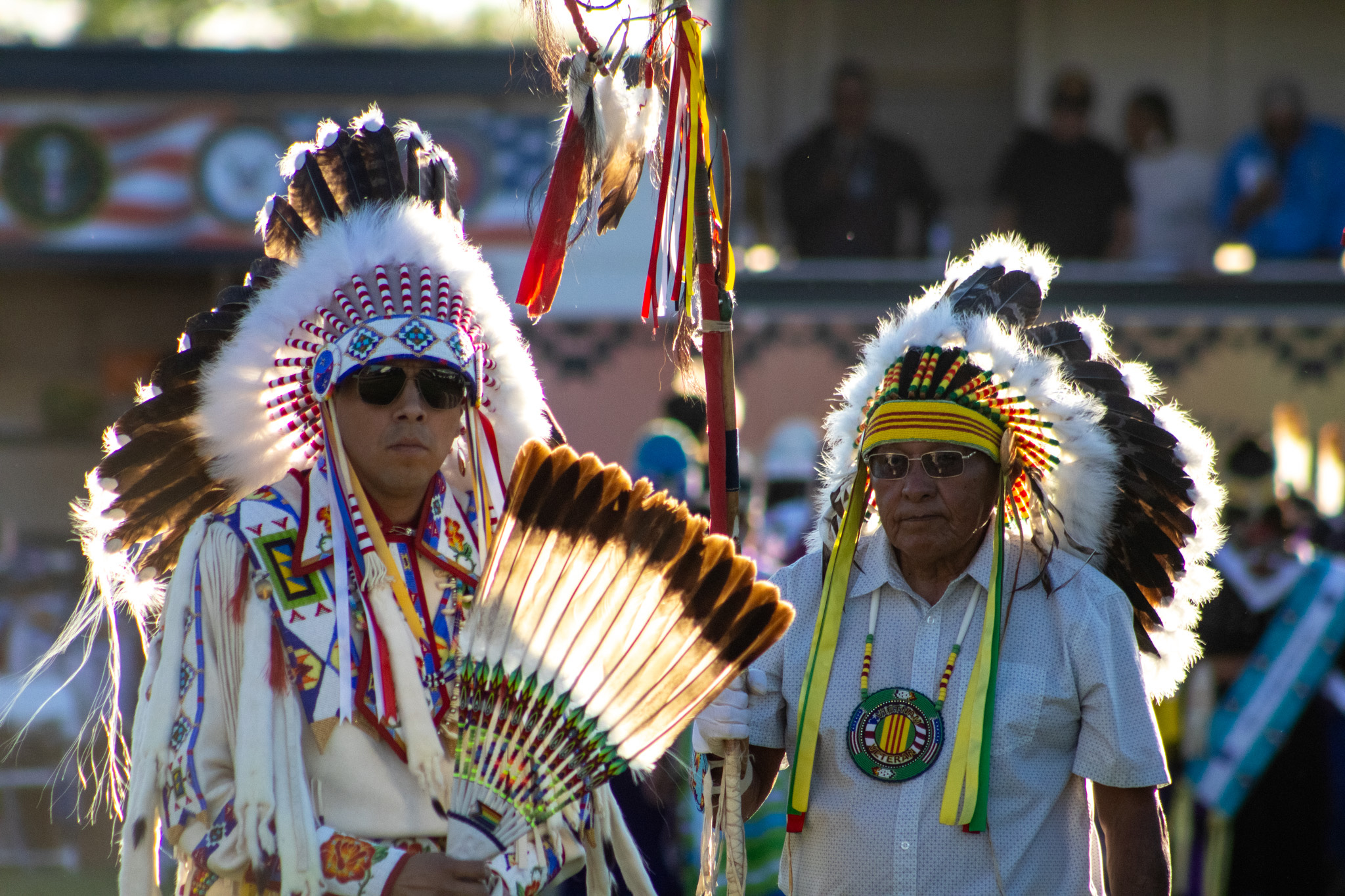
Adrian Stevens receiving his war bonnet. Photo courtesy of Adrian Stevens and Sean Snyder.
Adrian Stevens and Sean Snyder use their platform to raise awareness about issues affecting Indigenous peoples and to celebrate the strength of Two-Spirit identity. The couple’s beaded designs have been lauded with awards such as at this year’s Santa Fe Indian Market and have been featured in national media, including Vogue.
For 2026, the Denver Art Museum invited them to participate in our Native Arts Artist-in-Residence program to create new work for a reinstallation of the Home/Land section of the Indigenous Arts of North America galleries.
Snyder, a citizen of the Navajo Nation and descendant of the Southern Ute Tribe, and Stevens, a descendant of the Northern Ute, Shoshone-Bannock, and San Carlos Apache Tribes, knew just where to start.
Six years ago, Stevens won a Grass Dance challenge at a tribal celebration in North Dakota. The challenge involved dancing nonstop through 10 songs without missing a beat. The host tribe presented him with a war bonnet for being the last man standing. At the time, he and his partner were in mourning. They had each recently lost a grandmother. It’s custom for dancers to take a year off while in mourning, but before their grandmothers died, they encouraged their grandsons to continue to dance. And then Stevens won this competition and received the honor of the war bonnet, and it felt like there was a reason for it.
“People told us this war bonnet came to us because of our work advocating for our Two-Spirit community. And my uncles told me I should now build on the war bonnet and make a war shirt and pants to match and make it my own,” Stevens said. “So, it seems like there were many reasons why this war bonnet came into our lives.”
“And this residency was the perfect opportunity to create the pants and pipe bag to complete the set,” Snyder added. “It was a challenge!”
To illustrate the connection between historical and contemporary regalia, Snyders and Stevens also selected historical works from the museum’s collection to display alongside some of their new work. In addition to the buckskin shirt, pants, and pipe bag, also on display are ruby-beaded moccasins (wittily titled There’s No Place Like My Rez). Shown together, visitors can see the way traditional practices continue today.
“The beadwork on the historic piece is white, as is ours, and it has a nice balance of blues and this nice yellow that’s on the older piece that translates into our newer work,” Snyder said.
“We wanted to show that those pieces are still being created today,” Stevens said. “Even though there's deep history of what is in the archive, people are still creating these pieces presently, and it's living art.”
In fact, as living art, the artists will be retrieving their regalia and pipe bag to dance them in a war bonnet special next summer at their tribal celebration in Fort Duchesne, Utah. This will be the first time the museum will be collaborating with artists who will continue to use their regalia and personal items while an exhibition is still ongoing.
“It’s kind of a co-stewardship relationship with the museum,” said Danielle Stephens, Senior Interpretive Specialist at the DAM. “It’s helping us create a pathway so maybe we can do this in the future to support other artists who may want to loan regalia or other pieces and still have access to them, which is really incredible.”
“The special next summer is significant for us, because it’s part of our give-back,” Snyder said. “It’s such an honor for us and our families and now we want to give back to our families and to other war bonnet families in our community.”
While the regalia is being danced back in the artists’ community, the museum will be installing temporary labels to educate visitors about this collaboration and the significance of these living works of art.
Visitors can see Stevens’ and Snyder’s designs, plus work by our other 2026 Native Arts Artists-in-Residence Benjamin L. West and CooXooEii Black on level 3 of the Martin Building.
